
Care Instructions for Woven Wraps
Woven Wrap Care Guide
These beautiful textiles keep our sweet babies close and deserve some special attention. Care instructions can seem overwhelming at first — but they quickly become second nature. Many people even find wrap care surprisingly relaxing and therapeutic.
If you find yourself tense and in need of comic relief after reading through your wrap's sometimes daunting care instructions — we recommend you peruse this:
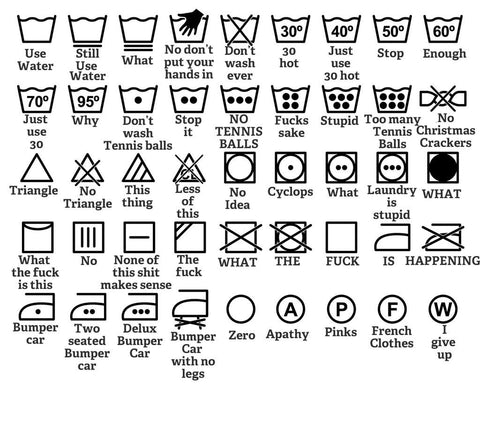
Seriously.
Before First Use
Wash your wrap before you wear it
We feel that all woven wraps should be washed prior to their first use. While some Didymos wraps come ready-to-wear, you'll find the first use much more enjoyable after a wash and dry. This also helps set the weave — especially important with airier weaves. Some wraps arrive slightly longer to allow for shrinkage.
Washing
Wash your wrap using the water temperature recommended on the care tag. A few important rules:
Recommended Detergents
For cotton, hemp, and linen: Nature Clean Liquid, Seventh Generation Liquid, ECOS Free & Clear, Ecover
For wool, alpaca, and cashmere: Eucalan (hand wash only — see the Wool section below)
No detergent on hand? A cup of plain white vinegar works. Vinegar can also be used in the rinse cycle for cotton, hemp, and linen — it acts as a natural softener and prevents detergent build-up.
Hard water? Didymos recommends adding a water softener if your tap water is very hard.
Drying
Ironing
"We bought an iron after we got into babywearing. Sometimes, there's CBC Ideas on the radio, a glass of wine, and a wrap to iron. And it's bliss."
Things change after you have kids.
Ironing is part of the recommended care for most wraps — especially blends of hemp and linen, which are prone to "perma-creases." We recommend steam ironing for almost all wraps (with the exception of silk — see below).
Set your iron to steam, use a spray bottle to dampen the wrap, or iron while the wrap is still slightly damp from drying.
Linen & Hemp
Linen and hemp wraps often arrive stiffer than cotton. A wash, air dry, and steam iron will help considerably to break the wrap in — but honestly, the very best way to break in a wrap is to use it.
Iron often — at least after every wash — to keep the wrap in good condition and prevent those perma-creases from setting in.
Wool
Wool can felt and become unsafe if not cared for properly
Always hand wash wool wraps. The enemy is heat, agitation, and friction — any of these can cause irreversible felting.
Silk
That's it.
Questions about your wrap?
Our babywearing consultants are happy to help with care, sizing, and everything else.
Ask a Consultant →